


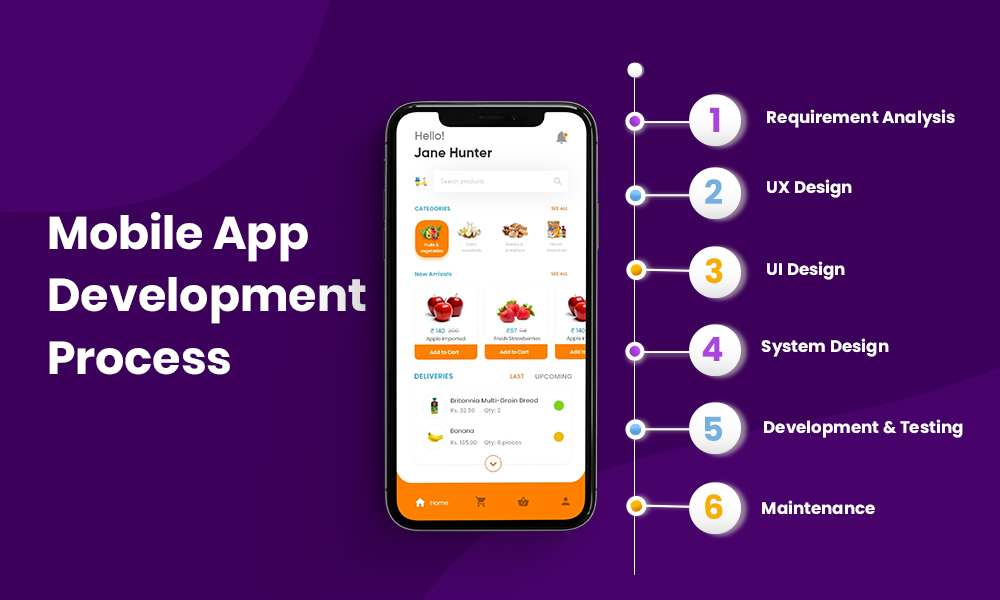
The market for developing mobile applications is booming. To stay connected to the outside world, more and more people are using smartphones, tablets, and other mobile devices. In response, thousands of developers have produced hundreds of thousands of apps that cover virtually all conceivable needs. However, despite the fact that creating apps can be a very rewarding experience for developers, it also carries a number of significant risks. Do you know that 99.9% of new mobile app businesses fail? As a result, there are many considerations that must be made when developing a mobile application.
This article will examine some of the major difficulties involved in creating mobile applications and offer advice on how to deal with them. To help you create fantastic apps that stand out from the competition, we’ll cover topics like user interface design, security considerations, performance optimization techniques, and much more. To develop and release a successful mobile application, a business must be aware of the following challenges. This is true whether they choose to manage the entire mobile app development project in-house or hire an outsourcing firm. So let’s get going.
a lack of uniformity
Developers must be familiar with the various standards related to each platform given the wide variety of mobile operating systems, hardware platforms, and development frameworks available. How well does this framework integrate with the current infrastructure is an important question to ask. Which APIs do I need to use to access device functions? and “How do I ensure that my app looks good across all devices?”
a challenging user interface
Because of the smaller screen size and input restrictions of mobile devices, user interfaces for mobile apps frequently differ significantly from those found in desktop computers or web browsers. In order to increase usage and satisfaction, developers must carefully consider how users will interact with their apps and offer a welcoming, simple experience.
Aspects of security
Considerable sensitive data can be stored in mobile applications, so security must be taken seriously. To prevent unauthorized access, applications must be properly encrypted, user authentication procedures must be reliable, and access control measures must be put in place.
performance improvement
Because mobile devices lack the computing power of desktop computers, developers must make sure their apps function properly on mobile devices as well. To achieve the best performance, this may entail rewriting specific portions of the app in native languages or optimizing code for speed and memory usage.
Tests and quality control
Any software development process must include QA testing, but it is crucial when creating mobile applications. In order to ensure compatibility and reliability, it’s crucial to thoroughly test an app on as many different devices as you can because there are so many different hardware platforms, operating systems, and form factors available.
Money-making techniques
One of the hardest problems that mobile app developers encounter is figuring out how to make money from their creations. It can be challenging to find the ideal balance between advertising and premium services, but if done well, it can generate a consistent flow of income for years to come.
Data storage and management
Large amounts of data stored in distant databases or cloud storage systems must frequently be accessed by mobile apps. Developers must ensure that their applications are scalable and consider problems like data replication and synchronization.
Platform Disintegration
It can be challenging for developers to stay current with the most recent changes due to the continued fragmentation of mobile operating systems. In order to make sure that an app operates properly and makes use of any new features or APIs added by the platform, it is crucial to keep an eye on new releases.
Costly development
It can be expensive to build a mobile application from scratch, especially if you want to make versions for different platforms. To avoid any unpleasant surprises, it is crucial to have a thorough understanding of the costs involved with each stage of development.
selecting a development strategy
There are many methods for creating mobile applications, including hybrid, web, and native methods. Developers will soon be forced to make a decision about whether to create native apps or use a cross-platform solution, depending on the difficulty of the project. Before choosing one strategy over another, it is critical to carefully weigh the benefits and drawbacks of each.
Being distinctive in the market for mobile apps
Due to the thousands of new apps that are released each day, the mobile app market is becoming more and more competitive. By putting an emphasis on the user experience, creating a distinct and appealing user interface, and utilizing marketing strategies like SEO and social media, developers can make sure their app stands out from the competition.
Updating and maintaining an app
In order to maintain user satisfaction after an application has been made available to the general public, developers must stay on top of maintenance tasks like bug fixes, platform updates, and feature additions. To guarantee that the app remains useful over time, a consistent update procedure must be in place.
Process of submitting to an app store
It can take a lot of time and effort to submit an app to one or more of the major app stores. To expeditiously get their app approved, developers must be aware of the various rules and regulations. They should also be mindful of best practices, such as carrying out appropriate keyword research for “App Store Optimization.”
gratifying user demands
Because there are so many different apps at their disposal, users have developed expectations for the caliber of each one. To stay competitive in the crowded mobile market, developers must make sure their app meets (or exceeds) user expectations.
localizing the content
An application’s reach can be increased and it can be more easily accessed by a global audience by releasing it in multiple languages. Depending on the target locale, localizing an app may entail translating the text, modifying the images and graphics, changing the time formats, and making other adjustments.
Just a few of the important factors that need to be taken into account when creating mobile applications. This is by no means an exhaustive list, but we hope it gives you some insight into some of the challenges involved in developing mobile software. Good fortune!


